Building tennis teams

As a long distance observer, it seems to me that Davis Cup success and Tennis Australia are at the cross roads. Perhaps they are even past that point and now heading in opposite directions. We recently played Kazakstan (who knew that even had tennis players?) in Darwin on grass and came very close to having our pants lowered. Now I am not saying the Darwin’s grass courts are not the epicentre of tennis in Australia nor am I inferring that we played there because nowhere else in the country would have given a damn, or even that Tennis Australia decided to play there because it gave us a distinct advantage, (surely not).

The dislike that our 23 ranked player Bernard Tomic publicly displayed for the organisation resulted in his removal from the team. Probably a good thing too as it gave him just enough time to become famous in Miami for paying too much for a hotel room that magically transforms into a jail cell. All of which must have made the gurus at Tennis Australia feel grand indeed.

I think there is a bigger play here though. We had great success in the Davis Cup in the era before the pros and then again in the early days of professionalism. Frankly we weren’t much good at any other team sport and certainly not any that involved balls. In those heady days we also had more than our fair share of players inside the top ten. Back then to help us along a little, backyards were often filled with tennis courts and every farm had one, and tennis courts were not littered across the four corners of the globe as they are now. (who would have thought it?)

So history aside, now we have a bunch of highly paid professionals, some of whom are clearly not capable of looking after themselves, that require more than just a ‘nice guy’ that looks great in undies, to give them assistance. Building a team in this era, as anyone that has done it recently will tell you, has its own unique set of challenges.

Add to that the money, the bloated egos and the lack of understanding of the scale of the exercise and it is no surprise to me that it is not coming together beautifully. Team building in Australia is different to (most of) the rest of the world. Particularly at the pointy end of sport, and particularly with the addition of Gen Y.

I cringe when I hear the older generation say that “this would never happen in Harry Hopman’s day” because while it is true, I really can’t imagine Mr Tomic and Mr Hopman having much to say to one another. I can only imagine what the reaction might be to the suggestion of a quick run up a few sand dunes. At least Darwin is well situated for that little beauty. No, Harry is not the answer.

Tennis Australia should ship in Ray McLean and his troops. If you have not had the opportunity to read his books, I recommend them to anyone in Australia involved in team-building. I have used the philosophy both with my work team and the sporting teams that I work with and the systems and processes work. Without giving too much away, Ray is like a modern-day version of Harry Hopman, in that he thinks differently to everyone else and has bought his own brand along with him. He has done for AFL what Harry did for tennis.

Ray developed his skills working with the Air Force developing teamwork in mission-critical scenarios. There is nothing quite like taking life and death training and then honing that experience for work in team sport. As many a team coach will tell you, winning isn’t life or death, it’s much more important than that. Good luck Tennis.

On friendships that drift

IMG_0588

I’m guessing we have all had friendships that have just drifted off into the ether. People that were once friends become acquaintances for no particular reason other than one or both parties stops making the effort that was once made. Most often neither party is at fault, sometimes the effort of constantly being the motivating force simply wears thin.

Occasionally it results in slightly embarrassing impromptu meetings in shopping centres or community get togethers but once that is taken care of the new status is confirmed and everyone is much the happier as a result.

I was watching a brilliant Netflix series on chefs the other day called (I think) the The Chefs Table, and the chef described many of his past friends as “just not interesting him much anymore.” While that is an extreme take on it, we probably also have old friends like that too. He or she may be OK in the right social setting, but that setting just wasn’t happening often enough. (think drink)

Perhaps in my case, I could sheet home the blame on my upbringing. After all, as the son of a Naval man, we moved house and school almost every two years which meant that I had some practice at not bonding totally and leaving people behind. Though in truth that may have some bearing, I do not blame my upbringing at all for allowing many of my best friendships to simply drift.

I really enjoy friendships that mean I don’t have to see people every day. I like to meet with my friends at a rhythm that suits me, not too often (whatever that may be) and not so rarely that I feel out of touch with their current challenges.

Supporting people through their challenges whether they might be mental, emotional or intellectual is the hub of all of my friendships. Offering a shoulder to cry on, a brain to pick, an ear to a version of a story or simply the comfort of a great meal and good wine is the cornerstone of every meaningful friendship I have. That may not be the case for everyone, but there you go.

That then may also explain why some friendships drift. Having picked my brain or eaten at my table or explained their story or cried on my shoulder, perhaps the other party needed more and I failed to provide it. I get really excited when I get the chance to share something with my friends. Sport or food or news it doesn’t really matter, life is exciting when that opportunity comes along. Friends are great, and I love to spend some time with them.


Footnote.Michael is the Chief Curator of http://www.thelifelogproject.com.au a business that helps people to tell their story for the benefit of future generations.

Letter to my children

About twenty years ago my mother died of a Cerebral Haemorrhage. No warning, no planning no goodbyes. About ten years ago my father died of lung cancer, this was a long lingering farewell. Though both events were incredibly sad, the hole left by someone dying suddenly is difficult to fill in a way that is impossible to explain and beyond compare.

Shortly after the death of my mother I put pen to paper and wrote a letter to each of my two sons. The letter was my farewell, though I had no intention of going anywhere. It was really difficult to write and I cried several times as I scratched my way over the keyboard in my three finger typing style.

The letters contained messages of love and friendship and my dreams for each of them and a few short stories about them growing up. They included short stories of when they made me particularly proud and some advice for each of them.

My two boys are completely different, both beautiful caring strong sensitive young men with their difference best summed up by saying one of them gets anxious if he doesn’t know what tomorrow will bring and the other is always seeking something different for tomorrow. The letter writing gave me a sense of comfort knowing that if I were to bid a hasty departure from this life, my boys would have some conduit to their father. I wasn’t prepared for what happened next though.

Having taken the time to think about what I most wanted to say to each of them and what I felt was most important not to leave unsaid, (and they are two different things) I then began to act differently. Not hugely differently. Not so the family thought I had met-my-maker-in-a-stroke-or-heart-attack kind of a way. But differently none the less. I was more thoughtful, less reactive and much quieter. I began to be much more chilled out about them and their future. Which was nice for me and I’m sure was much more enjoyable for them too.

After all, as I said in my letter to them, above all else I wanted them to know the luxury of having been unconditionally loved by someone and to feel happiness. Neither of these things will be more likely to happen by me fussing about it.

Little did I know at the time that this correspondence would be the precursor for my business some fifteen years later. The Life Log Project helps people do this in a modern way using high quality audio recording. Of course the log can be used for lots of other things too. I have produced logs for people who wanted their families to know things after they had died, to explain divorces, to explain choices, to shine a light on an event or just to supply a delightful back story for the sake of posterity.

What I have noticed is the effect is has on people after they have committed to recording their inner most thoughts. They start to live them

Michael www.thelifelogproject.com.au

You could be a dick

Twice a year we award worthy Australians with Medals. I get excited on both Australia Day and the Queens Birthday weekend in anticipation of reading the lists. As someone who has spent so much time recording stories and interviewing people it will not be any shock to you that it is the stories behind the awards that I like the most.

This year we have a cracker. The wonderful Dick Smith was awarded the country’s top honour and his is a lovely story, that should resonate with an entire generation.

Mr Smith is an achiever. The Americans would probably call him a winner. From humble beginnings he toiled to eventual business success and now seems to spend his time giving his money to people who need it more than he does.

The part of his story that should have ears burning everywhere, is his schooling. Marked 45th of 47 students in his year, he went through the apprenticeship route rather than to University. Many a young person is led to believe that if you haven’t made your mark academically by 12 or 13 you are up against it in the success stakes.

Dick Smith would have everyone know that he was not good at school but pretty good at business, leadership, learning and (in my opinion) being a good bloke. Personally I find it interesting that school failed to provide him the opportunity to shine. Though it doesn’t surprise me. The point though is that he didn’t let a thing like academics get in the way of success.

I am not teacher bashing either, some of my favourite people are teachers so this is not about teaching standards or anything like that. It is important for young people to know that the bumps and scuffs that almost inevitably occur during a young persons schooling are not an excuse to give up. In fact they should be providing the motivation to dig a little deeper and work a little harder. Dick Smith’s story shows there is more than one way to skin a cat. We need to be creative in the way we look at success, the way we approach hurdles and the methods we use to shine the light on the big world. Thank you Dick.

Poor Riley

We have had some rough weather on the east coast of Australia recently resulting in some flight delays, and combined with my desire to get to airports early, accumulated into 4 hours of unexpected reading time at Coolangatta Airport yesterday.

I sat by a big window to take advantage of the light and within minutes a family of four had a similar idea and plonked themselves next to me. Mum, dad and two 10-year-old boys (or thereabouts). Now, I would be the first to admit that parenting can be tricky and parents are not immune to poor moods, and airports, which sometimes signal the end of either a perfect holiday or a disaster, probably equate to a Petrie dish of emotions, and therefore may not be the best place to make judgements about parenting skills, but…

Poor Riley. In the hour they sat next to me, I counted dad being rude to young Riley on more than twenty occasions. Bearing in mind, I didn’t start counting until it became like a broken record so it could have been double that. I judge rude to mean, the father saying something that he would not say to a peer, or saying it in a way that he would not phrase it to a peer for fear of having his front teeth knocked out.

For instance you would not say to a peer, “don’t interrupt me I’m doing something here.” A polite considerate person might reframe that as “Hang on just one minute I need to concentrate for just a minute while I get this done and then I will be straight back to you” or how about this? “Riley, move away, give me some space, I hit you every time I type on this side of the keyboard” or “Leave me alone Riley”.

Poor Riley is going to grow up without any manners because dad doesn’t use any. Or worse Riley is going to work out that dad uses his manners with everyone but him. From my vantage point of 100cm away, all I could see was an eager, sweet kid that wanted to be close to his father. He asked sensible questions, none of which were answered because dad was way too busy uploading photos using the free wi-fi and every question was met with a response like “not now Riley” “leave me alone” “I’m doing something Riley.”

Kids learn so much from their parents, manners, consideration, caring, time management, prioritising, how to love and show appreciation and so much more. How do you think little Riley is fairing? As a spectator it isn’t up to me to point out that dad has no manners or is treating his son poorly, or is a twerp (a beautiful old-fashioned word) but that won’t stop me writing about it.


To tattoo or not to tattoo

I have never been a great fan of tattoos. For the same reasons I am not a fan of pierced ears. Body ornamentation that can’t be reversed has always seemed way too scary to me. I liken it to saying to someone, “the good news is you get to pick a nice looking medium priced car, the bad news is you will be driving this one for the rest of your life.” The appeal immediately vanishes.
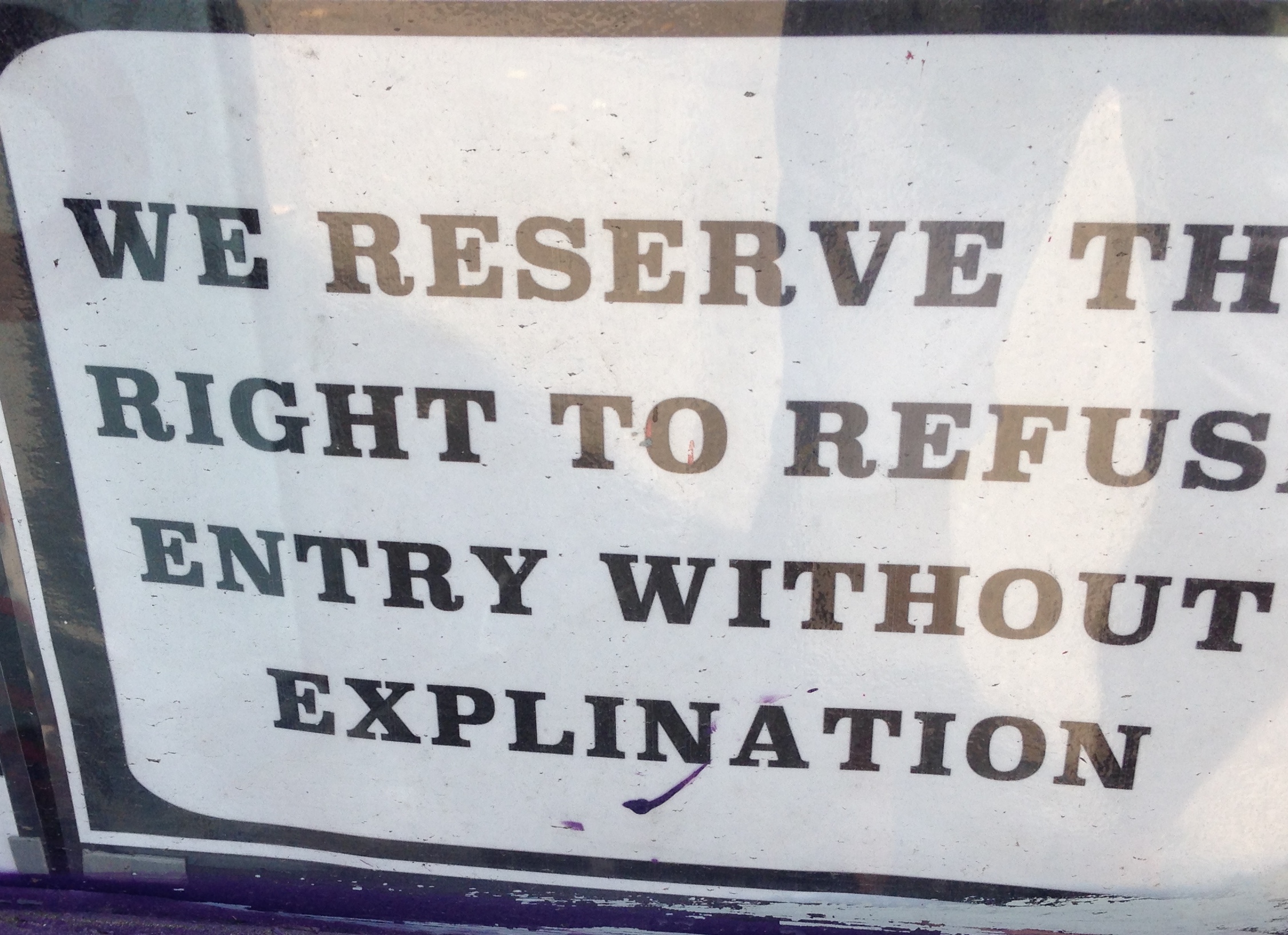
To make matters even more complicated, there are good and bad inkers just like there are good and bad cars. See picture below of a sign in a tattoo shop window.

IMG_0423
Naturally enough, as soon as my sons were old enough they went out and got inked. I guess I should have seen that coming. They even have a tattoo that only makes sense when they stand together, which makes no sense to me. (Bless them)
Recently a young guy from our neighbourhood put out a call on Facebook asking for his friends to vote on which tattoo he should get as his first, either dice or rosemary beads (sic). So I can see him rolling into the tattoo shop above, and asking for rosemary beads, and who-the-hell would know what he would walk out with.

I know I am old and grey and way too conservative to be entering into the debate on tattoos, and frankly that is ok with me.

Vote for me, regardless of my performance.

Popularity, or perhaps more accurately the democratic process can get in the way of progress and improvement. These days with many associations and other organisations being controlled by boards that are forced to rely on the popular vote, that very process often stymies the development of the organisation.

Lets face it, from time to time, anyone in charge of anything is going to have to do something that isn’t popular. Raise a fee here, reduce services there, revamp something, re-align something, replace something or build something completely new. Chances are, any of those activities are not going to please everyone.

I have often heard board or committee members say, “it is vital we are seen to do something”. Which is code for “I want to be voted back in.” Thus positioning that board member or committeeman firmly in the role of “champion of popular activity.” This could well put him at odds with what is good for the organisation.

Surely for an organisation to develop, grow, become more resilient etc, that organisation needs to do what is right for them, not what is politically prudent for the survival of an individual board member. But here is the curly one. Who is going to call the director on this absurdly juvenile behaviour? The General Manager can’t, not if he has plans to work there, long term. Fellow board members may not want to call the behaviour out for a number of reasons of their own.

Often it will go unchecked resulting in outcomes that are less than ideal for the org. I have seen it time and again. It rarely gets called out for what it is, but most often gets relabeled as something like expediency or whats good for us is good for the everyone, or the value of stability.

Wouldn’t it be cool to have someone like an omnipotent freelance roaming ombudsman, charged with being “tough but fair” calling out activity in all circles of life that were self-agrandising and out of step with the wellbeing of whichever org. the activity involved.

School headmasters would lose their jobs immediately rather than hiding in their offices waiting for retirement. Line managers would be forced to leave rather than waiting for their long service leave. Office managers would be sent packing for putting their own ‘work-life balance’  ahead of developing the people around them. Board members would simply leave, embarrassed by their own pitiful performance all in a bid to be re-elected.

Maybe Mr Putin is onto something here???? Just kidding. Who would want to get rid of the opportunity to have their say at the ballot box? No-one is going to feel comfortable giving up their democratic right to vote someone out of office. Truth is though, how often does it happen? For most org’s it’s business as usual. Same old, same old, regardless of the performance. Sad but true.

Disconcerting reunion

Class reunions can be an uncomfortable time for many people. I have heard tales of people getting tied up with anxiety prior to the event such that though they had travelled hundreds of miles to attend, they could not walk through the door. I have also read a tale of one class candidate detailing the web of lies he had spent days rehearsing prior to the reunion. I can only guess, to cover for a life not yet lived.

My take on the level of discomfort comes from being forced to place a bookmark in one’s life story. Being forced to do the maths of one’s post-school existence can be a harrowing experience. Wondering if they measure up, and of course no-one does.

While I do not mind doing the maths on my existence, most of us were raised, safe in the knowledge it would not be until we were close to drawing our final breath that we would be faced with the task. For most people it comes down to working out their value. Has it been a life well lived? That is where the angst begins.

If the answer is no, or not yet, the accompanying feeling in the pit of the stomach, those butterflies, are telling you something. Get on with it. I have never believed that people need to climb mountains or swim oceans to lead an honourable, effective, meaningful life. I think our lives should be judged on what we leave behind. Our children, our estate and the consequence of our actions (both good and bad).

Conveniently then, I also believe, no-one’s life should be judged when there is still time and opportunity to do honourable deeds, be effective and add meaning. A life worth living. Bring on the reunion!